
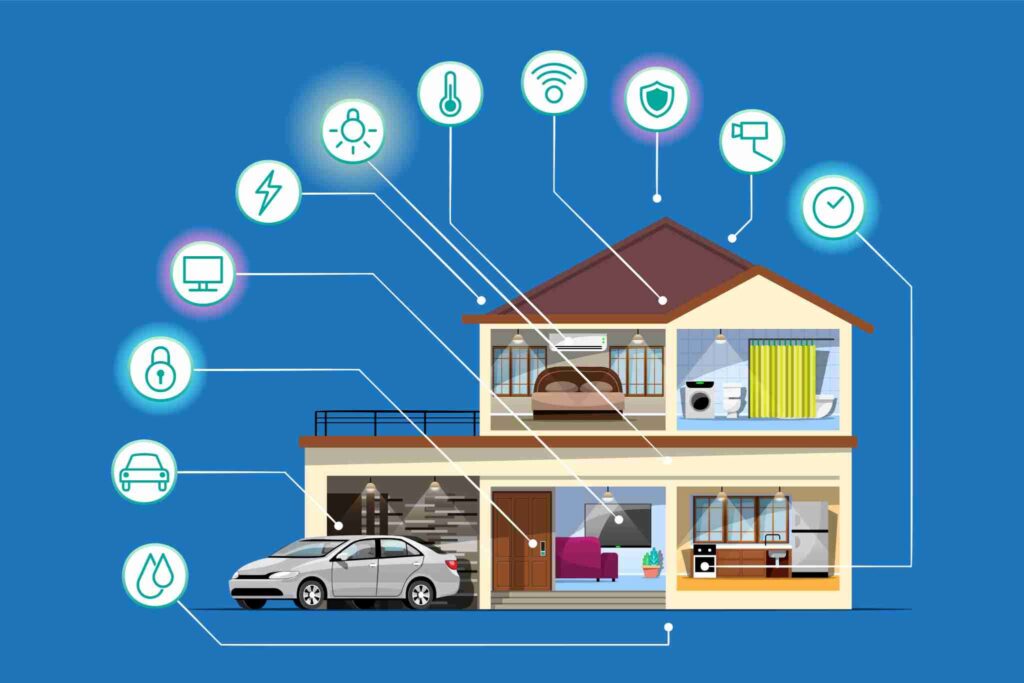
Discover how AI and IoT make homes smarter and energy-efficient. Learn how smart devices reduce electricity use, lower bills, and protect the environment.
How AI and IoT Are Powering Energy-Efficient Homes
In an era where sustainability and technology go hand in hand, Artificial Intelligence (AI) and the Internet of Things (IoT) are reshaping how we live. Homes are no longer just living spaces — they’re becoming intelligent ecosystems that automatically adapt to our habits, optimize energy use, and reduce waste.
If you’ve ever wondered how your lights know when to turn off, or how your thermostat adjusts itself to save energy, the answer lies in the powerful duo of AI and IoT. Together, they are creating the foundation for energy-efficient homes that are both eco-friendly and cost-effective.
🔹 Understanding AI and IoT in Smart Homes
Before diving deeper, let’s break down what these technologies mean in simple terms:
- AI (Artificial Intelligence): The “brain” that analyzes data, learns from patterns, and makes intelligent decisions — like adjusting temperature or detecting energy waste.
- IoT (Internet of Things): The “network” that connects smart devices (like lights, thermostats, and appliances) to communicate and exchange data with each other and with you.
When AI and IoT work together, your home becomes capable of thinking, learning, and responding — much like a living organism that adapts to your behavior.
🔹 How AI and IoT Create Energy-Efficient Homes
Energy efficiency isn’t just about saving electricity — it’s about optimizing every watt of power used in your home. AI and IoT make this possible by collecting real-time data from connected devices and making automatic adjustments.
Here’s how these technologies are transforming everyday living:
💡 1. Smart Lighting Systems
raditional lights stay on until you switch them off — even if no one’s in the room. AI-powered smart lights, like Philips Hue and LIFX, use motion sensors and ambient light detection to automatically control brightness and power.
How It Works:
- IoT sensors detect occupancy and natural light levels.
- AI algorithms adjust lighting intensity or turn off unnecessary lights.
- Voice assistants like Alexa or Google Home provide manual control.
Benefits:
- Up to 60% reduction in electricity use
- Increased bulb lifespan
- Seamless comfort and convenience
🌡️ 2. Smart Thermostats and Climate Control
Smart thermostats such as Google Nest, Ecobee, and Honeywell Home are among the best examples of AI and IoT in energy-efficient living.
How It Works:
- IoT sensors track temperature, humidity, and occupancy patterns.
- AI analyzes user habits and weather data to set ideal indoor conditions.
- It automatically turns off or lowers heating/cooling when no one is home.
Result:
Homes equipped with AI-based thermostats save 10–15% on heating and up to 20% on cooling costs every year.
⚡ 3. Smart Energy Monitoring Systems
IoT-enabled energy monitors like Sense Energy Monitor or Emporia Vue give homeowners real-time insights into power consumption across devices.
What They Do:
- Track which appliances consume the most energy
- Use AI to detect abnormal usage patterns (like faulty wiring or leaks)
- Recommend ways to reduce waste and lower bills
These systems empower users to take control of their energy usage — often reducing waste by 20–30% through informed decisions.
🧊 4. AI-Driven Home Appliances
Modern appliances like refrigerators, washing machines, and air purifiers are becoming smarter and more efficient thanks to AI and IoT.
Examples:
- AI Refrigerators: Track expiration dates, recommend recipes, and optimize cooling.
- AI Washing Machines: Adjust water levels and cycle times based on load size.
- Smart Ovens: Automatically regulate heat for perfect results with minimal power use.
These intelligent features not only enhance convenience but also cut energy waste significantly by optimizing usage per task.
🔋 5. Smart Power Grids and Energy Distribution
Beyond individual homes, AI and IoT are transforming how power is delivered and managed. Smart grids use sensors and predictive analytics to balance supply and demand efficiently.
In Smart Homes:
- Devices communicate with the grid to consume energy during off-peak hours.
- AI predicts peak demand times and adjusts consumption automatically.
- Solar energy integration becomes seamless with automated energy storage management.
This intelligent coordination leads to lower electricity costs and reduced carbon footprint.
🌞 6. Renewable Energy Integration
Homes with solar panels or wind turbines benefit from AI and IoT in unique ways.
How It Helps:
- AI predicts optimal energy production hours based on weather forecasts.
- IoT systems store excess energy in batteries or feed it back to the grid.
- Users can track real-time energy generation and savings through apps.
This self-sustaining model enables homes to become eco-efficient power producers, not just consumers.
🔹 How AI and IoT Work Together in Real Time
Here’s a simple example:
Imagine you leave for work on a hot day.
- Your smart thermostat notices no movement and adjusts the temperature.
- Your AI lighting system switches off unnecessary lights.
- The IoT energy monitor detects low activity and puts certain devices into power-saving mode.
- Your solar battery system redirects excess energy for later use.
All this happens automatically — saving energy, lowering bills, and enhancing convenience.
🔹 Real-World Example: Smart Homes Leading the Way
Cities like Singapore and San Francisco are pioneers in AI-powered smart homes. For instance:
- Google Nest Homes use adaptive learning to cut power bills by up to 25%.
- Tesla Powerwall systems manage home energy storage efficiently.
- LG ThinQ and Samsung SmartThings platforms unify all smart devices for seamless energy optimization.
These models showcase how combining AI and IoT can make sustainability an achievable household goal.
🔹 Benefits of AI and IoT for Energy Efficiency
Benefit | How It Saves Energy |
Automation | Adjusts settings without human input |
Data-Driven Insights | Identifies waste and inefficiency |
Predictive Maintenance | Prevents breakdowns and leaks early |
Renewable Integration | Balances solar or wind energy effectively |
Remote Control | Manage devices from anywhere via smartphone |
🔹 Challenges to Overcome
While AI and IoT bring immense potential, homeowners should be aware of some challenges:
- Privacy Concerns: Data collection by smart devices requires strong security protocols.
- High Initial Costs: Smart systems can be expensive upfront but pay off in long-term savings.
- Connectivity Dependence: These technologies rely on stable internet connections.
- Compatibility Issues: Not all IoT devices seamlessly integrate across brands.
Despite these challenges, the long-term benefits for sustainability and comfort far outweigh the drawbacks.
🔹 The Future: Fully Autonomous, Energy-Optimized Homes
The future of smart living lies in AI-driven automation where homes function autonomously.
- AI will analyze your lifestyle and automatically adjust lighting, temperature, and appliance usage.
- IoT systems will coordinate with renewable sources for net-zero energy consumption.
- Predictive AI will alert homeowners before inefficiencies occur, ensuring continuous savings.
This is more than just convenience — it’s a path toward sustainable living that benefits both people and the planet.
🔹 FAQs: AI and IoT in Energy-Efficient Homes
Q1: How do AI and IoT reduce home energy costs?
By monitoring real-time usage and automating settings, they prevent overuse of electricity and optimize power consumption for every device.
Q2: Are AI and IoT devices difficult to install?
No. Most modern smart devices are plug-and-play, with easy app-based setup and compatibility across systems like Google Home or Alexa.
Q3: Can smart homes run without the internet?
Some basic features (like timers) still work offline, but full automation and data syncing require a stable internet connection.
Q4: Do AI systems need human input to learn?
Initially, yes. But over time, AI learns your habits and makes decisions automatically based on your preferences.
Q5: Are AI-powered smart homes secure?
When properly configured with encrypted networks and strong passwords, AI and IoT systems are very secure. Always use reputable brands and update firmware regularly.

🔹 Conclusion
AI and IoT are more than futuristic buzzwords — they’re the foundation of a new era in energy-efficient living. Together, they make homes smarter, greener, and more cost-effective by learning, adapting, and optimizing every action.
From adjusting room temperatures automatically to managing solar energy and predicting maintenance needs, AI and IoT bring sustainability to your fingertips.
As technology continues to evolve, these innovations will lead us closer to fully autonomous, eco-friendly homes — where efficiency isn’t a choice but a built-in feature of modern living.
Usefull information 👍👍👍